
The technology of the future is no longer confined to the future
Quantum computers, long associated with science fiction, are moving from laboratory research toward real-world applications. They are not yet mature enough to replace classical computers, but technology companies, universities, and research centers are making significant investments in the field.
The real value of quantum computing is not making everyday office work faster. It is creating new ways to approach specific, highly complex problems that classical systems struggle to solve. For businesses, the key question is therefore not when a quantum computer will appear on every desk, but which business problems it may transform and how organizations should prepare.
What is a quantum computer?
Today's computers process information using bits that hold a value of either 0 or 1. Quantum computers use quantum bits, or qubits. Qubits use properties of quantum mechanics, including superposition and entanglement, to represent different possibilities together during certain calculations.
This does not mean that quantum computers will automatically solve every problem faster. Their potential advantage emerges when suitable quantum algorithms are applied to areas such as optimization, molecular simulation, cryptography, and selected machine-learning problems. Rather than replacing classical systems, quantum computers may provide specialized processing power that complements them.
Where could quantum computing make a difference?
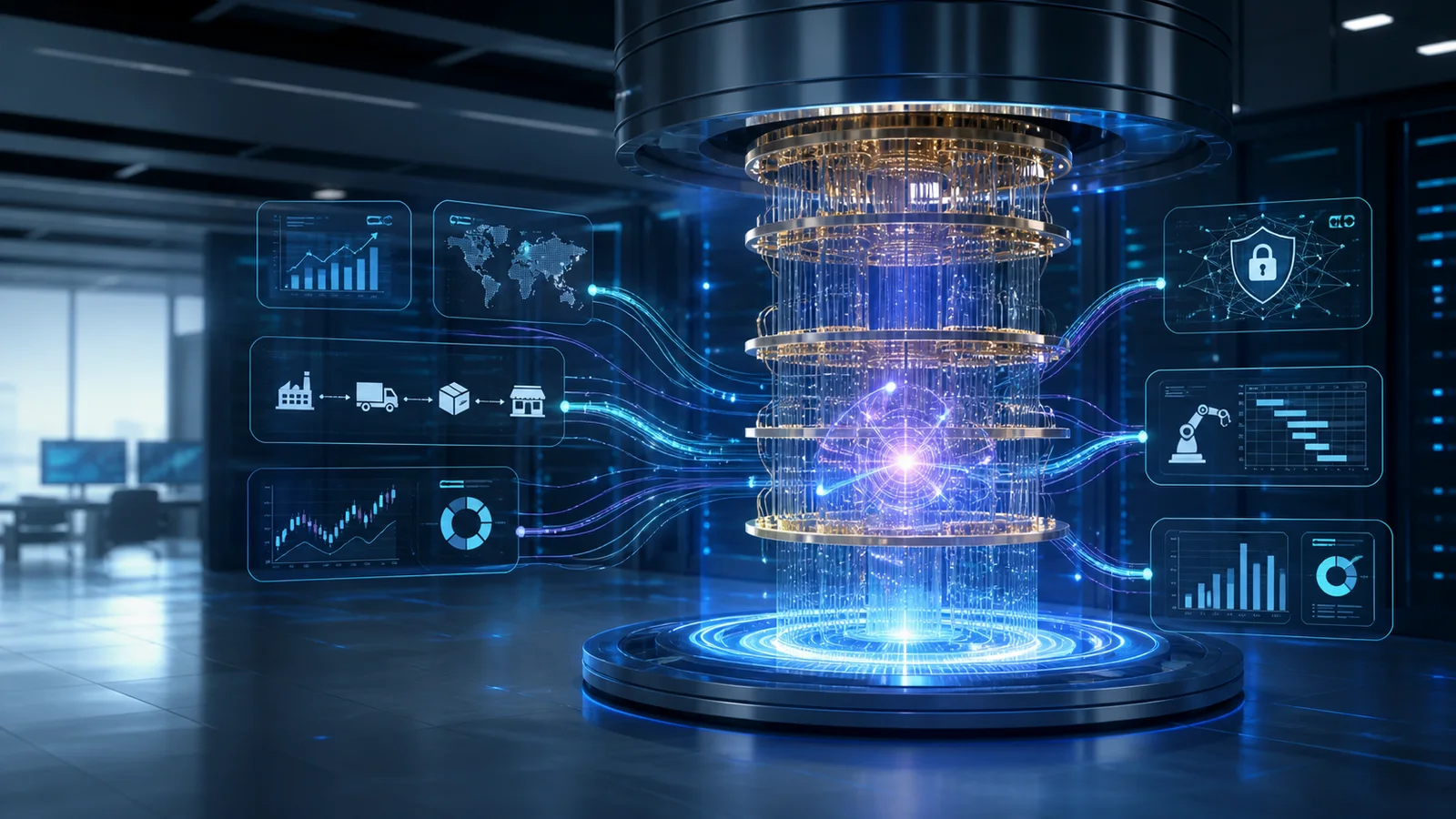
The areas most likely to benefit are those that require many variables, constraints, and possibilities to be evaluated together.
- Financial modeling, portfolio optimization, and risk analysis
- Logistics networks, vehicle routing, and delivery planning
- Production scheduling, capacity planning, and resource allocation
- New computational approaches for AI and machine learning
- Drug discovery and molecular simulation
- Development of new materials and chemical compounds
- Cryptography, cybersecurity, and post-quantum encryption
In optimization problems involving hundreds of constraints and millions of possible combinations, quantum and quantum-inspired methods may offer businesses valuable new solution paths.
Why should businesses pay attention now?
Most organizations will not purchase their own quantum computer in the near future. Even so, cloud-based quantum services, hybrid computing models, and changing security standards will have direct business implications.
- Data security and encryption standards will evolve
- New computational methods for complex data analysis will emerge
- Decision-support and optimization systems may become more capable
- Hybrid classical-quantum approaches may influence AI applications
- Quantum-ready architecture and skills will become relevant to technology planning
Data security is one of the most critical issues. A sufficiently powerful, fault-tolerant quantum computer could eventually threaten some of today's widely used public-key encryption methods. Post-quantum cryptography has therefore become a strategic security area that organizations should monitor.
The impact on ERP and Business Intelligence
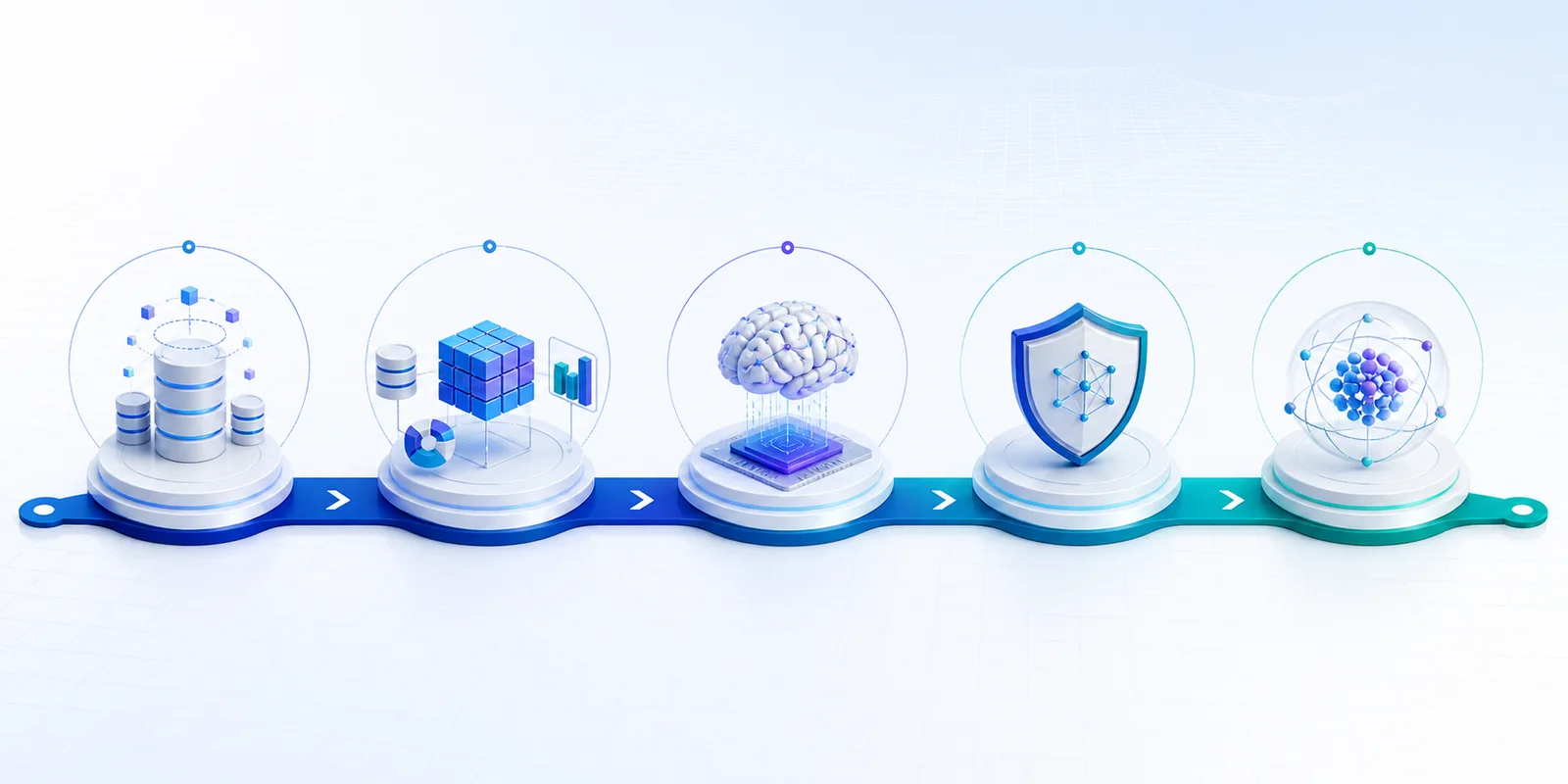
As quantum computing matures, ERP and Business Intelligence solutions may evolve from systems that primarily report the past into decision platforms capable of evaluating many future scenarios together.
- Production plans could be optimized across capacity, deadlines, cost, and machine availability
- Supply-chain disruptions and alternative sourcing scenarios could be analyzed more comprehensively
- Thousands of production, purchasing, and distribution scenarios could be compared
- Inventory levels, safety stock, and carrying costs could be balanced more accurately
- New forecasting and decision-support models could be developed for large datasets
This transformation will not be achieved through quantum hardware alone. Reliable results will still depend on high-quality data, accurate business rules, integrated ERP processes, and strong analytical foundations.
What should companies do today?
Although widespread use of quantum computing in daily business processes will take time, organizations can build a resilient digital foundation now.
- Continue digital transformation investments around measurable business goals
- Strengthen data quality, governance, and system integration
- Invest responsibly in AI-supported analytics and decision systems
- Maintain an inventory of encryption methods and critical data
- Monitor post-quantum security standards and migration guidance
- Plan training and pilot projects that build quantum awareness across IT and business teams
It is particularly important to classify information that must remain confidential for many years. Instead of attempting an overnight security overhaul, organizations can adopt a phased transition based on risk priorities and a reliable system inventory.
Preparing for the quantum era starts with today's data foundation
Quantum computers are unlikely to eliminate classical computing. They are better understood as powerful tools that may open a new era for solving specific, exceptionally complex problems. The most realistic near-term model is a hybrid environment in which classical computers, AI systems, and quantum resources work together.
For businesses, the priority is not predicting the exact date of the transition. It is building secure, integrated, data-driven, and AI-supported systems today. VGantt follows emerging technologies closely and continues to develop sustainable, secure, and data-led solutions for the digital transformation journey.