
Almost every business that sets a digital ad budget asks the same question: Meta or Google? The right answer is usually 'it depends' — because these two platforms do not do the same job. Before choosing one, you need to understand what each is for.
The core difference: capturing vs creating demand
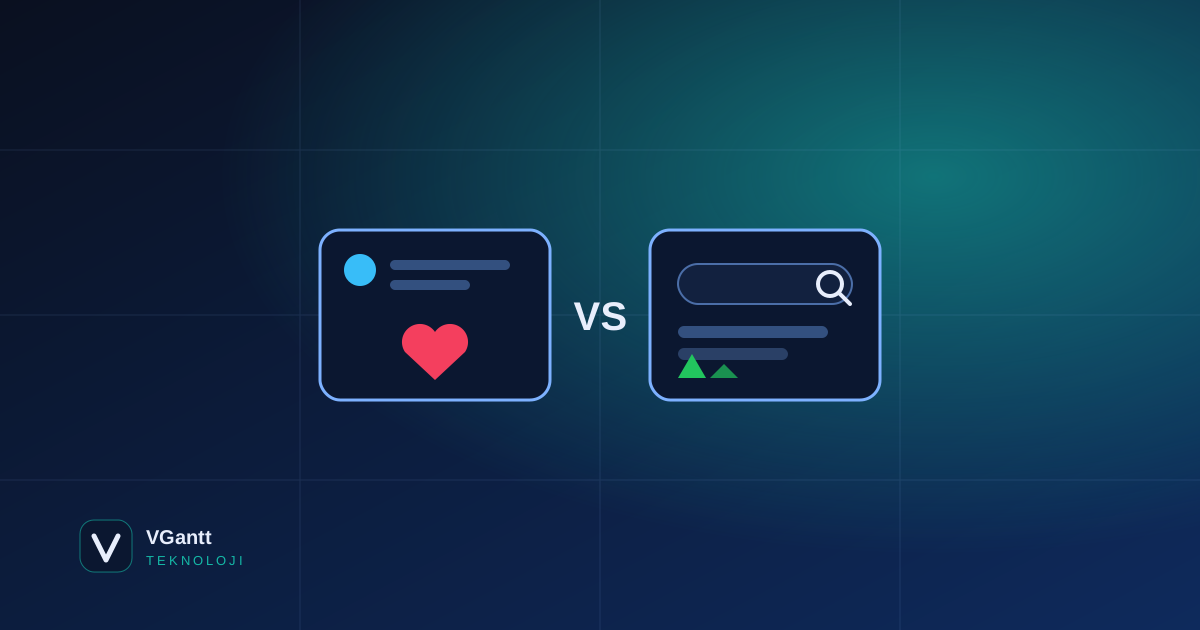
Google Ads mostly captures demand. The user is already searching for something — say 'web design agency in Istanbul' — and you appear at that exact moment. Intent is high, conversion is fast.
Meta Ads, on the other hand, creates demand. The user isn't searching; while scrolling their feed they encounter your product matched to their interests. Here your job is to spark curiosity, remind them of a need, and introduce your brand.

Which suits which business?
- Google: Strong for urgent-need services (plumbing, legal, healthcare), high-intent searches, and B2B.
- Meta: Ideal for visually-driven products, fashion, e-commerce, brand awareness, and impulse purchases.
- Both: For most growing brands, a balanced combination is healthiest.
How should you split the budget?
There is no exact formula, but a practical start: if you need fast conversions and cash flow, weight toward Google; if you need brand awareness and new audiences, weight toward Meta. Regularly reallocating budget based on what the data shows matters far more than a one-time decision.
The power of using both together
The best results usually come from running both platforms together. Users who discover your brand on Meta later search your name directly on Google. Those who showed interest on Meta but didn't buy are won back through retargeting on Google and Meta. The channels are not rivals — they are different stops on the same journey.
At VGantt we manage Meta and Google campaigns with a single performance strategy, optimize budget by conversion, and make every click trackable.